 Transaction risk intelligence
 Automated supplier statement reconciliation
 Supplier risk intelligence
 Managed AP recovery audit
 Supplier file performance review
 Forensic risk analysis
 Consulting and bespoke reporting











With the 2024 ECCTA legislation putting the microscope on fraud prevention procedure, now it’s more important than ever for companies (especially large ones) to have thorough controls in place. nowhere is that more important than within your finance procedures.
Without the right level of controls for your organisation, you could be at risk of falling victim to the ‘failure to prevent fraud’ offence, incurring unlimited fines, not to mention the reputational damage involved in such a scandal.
The master supplier file is an often-overlooked area that can fall between the cracks, but our data shows that 90% of organisations can trace transactional issues back to supplier file discrepancies.
So, to help you get to grips with your master supplier file risk, we’re looking at five red flags that could indicate further troubles in your future.
You can’t tell one supplier from the other
When you try to find a supplier in your file, how easy is it to find?
Supplier master files with duplicate entries are confusing for staff, and it’s easy for fraudsters to take advantage of this confusion, allowing your team to pay a valid invoice to an incorrect account. If you do have duplicate entries for a specific reason, make it extremely clear for staff to recognise which account needs to be used for which reasons. For example – state clearly the currency or the country of each version
A duplicate entry could be an entirely fake vendor with differing details, or the same vendor details with a different internal code, perhaps made because a staff member couldn’t find the existing entry and believed it didn’t exist.
It’s imperative to check any essential duplicates regularly for tampering, and to remove any unnecessary supplier entries as soon as possible. Not only because it risks fraud, but because duplicate suppliers can cause confusion and slow down the entire process.
Some suppliers haven’t been used in years
If you have suppliers on file who date back years, but they are very seldom used, they could be a prime candidate for fraud. It’s easy to overlook a change to supplier when they aren’t reviewed often, and a sporadic invoice. This is especially apt for suppliers where the product or service is used in emergencies, so the date won’t be consistent.
It’s not easy to get information about changes to the file
Having a clear and highly visible audit trail is important for a few reasons – not least because if you do discover a fraud attempt, it’s easier to pinpoint when and how it happened. But so is having a clear approval process for changing supplier details which doesn’t allow for anyone to circumvent it. A transparent audit trail and a stringent approval process are excellent deterrents for internal fraud.
You don’t know who is responsible for supplier file upkeep
It’s a long-debated issue – who is truly responsible for the compliance and cleanliness of the master supplier file? Often it can fall between the areas of the business – procurement, accounts payable, data. Some view it as a collaborative effort, with each area of the business doing their specific part to keep the file in order, and others have a set department responsible. What we know is that if responsibility is not owned, the supplier file can fall into disarray and quickly become a risk.
You can’t remember the last time your supplier file was fully cleansed
Perhaps the most telling red flag. According to a survey, many finance teams verify suppliers only at onboarding and ad hoc – when something needs to be changed. In the meantime, it’s likely that the supplier file really only gets a look over before an audit – once a year. For something that is constantly growing and changing, you can see why this kind of control just won’t be enough to protect you from fraud risk. And a year is a very long time to let fraud go unnoticed.
Do you have any of these red flags?
If you do, we recommend a structured approach to combat this.
- Review your supplier file procedures. Before diving into cleansing, it’s imperative to review the process for entering suppliers onto the file. Ensuring each entry is clear and accurate is a vital part of fraud prevention and compliance.
- A full supplier file cleanse. The first step to a manageable supplier file is to perform a full supplier cleanse. Remove all dormant and unnecessary duplicate entries and clearly label necessary duplicates according to your procedures. Luckily, there are a range of options to help you identify these entries, including managed services, and automation software.
- Continuous supplier monitoring. After the file has been cleansed, upkeep is key. Without it, you risk the file falling back into chaos, increasing the danger of fraud once again. We recommend utilising software to monitor your master supplier file for dormancy and duplication for maximum efficiency. An automated system can identify these issues to your team, so they can act fast. This lowers the risk of payment issues such as late payments or duplicate payments, and fraud.
FISCAL can help cleanse your master supplier file.
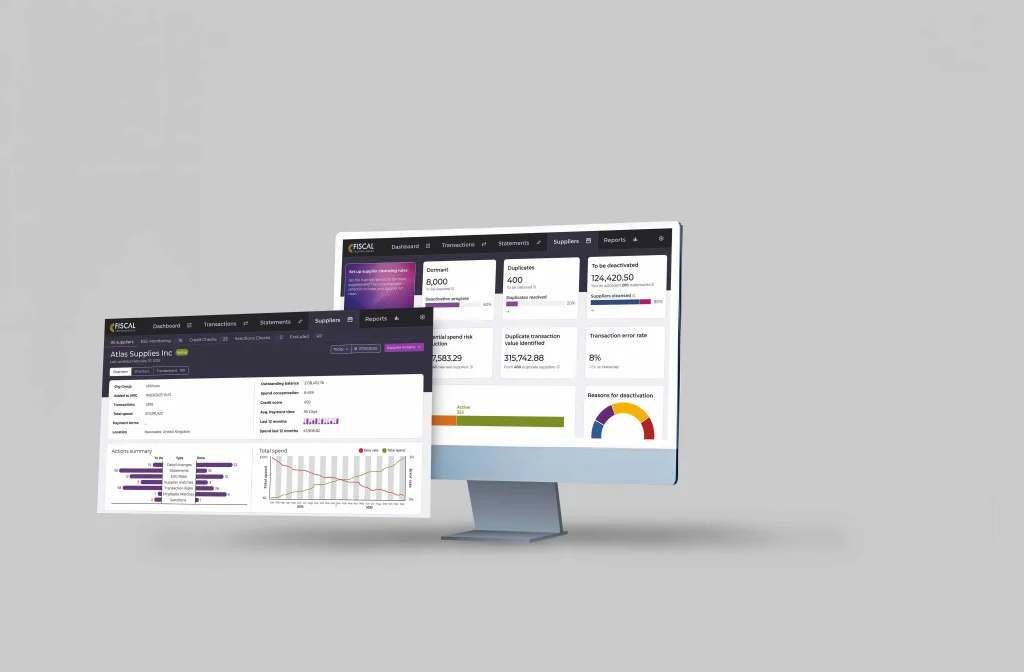
Our supplier monitoring module constantly analyses the master supplier file, finding issues, including fraud indicators, for your team to review. This automated solution is an indispensable control to keep your fraud defences watertight, protecting your organisation and lending weight to legislative compliance.