 Transaction risk intelligence
 Automated supplier statement reconciliation
 Supplier risk intelligence
 Managed AP recovery audit
 Supplier file performance review
 Forensic risk analysis
 Consulting and bespoke reporting










Digital transformation has been a buzzword for many years, in businesses across the globe. And it still holds water today, with many companies still in the process of creating fully digital processes. With technologies changing at an incredible rate, it’s possible that we will forever be striving to keep up. So how have we seen purchase to pay change over the years?
What is digital transformation in finance and accounting?
In finance, digital transformation is the process of using digital technologies to meet the changing needs of the organisation. Primarily, this consists of digitising and enhancing finance processes, aiming to increase productivity and reduce waste. The cost benefits of digitisation speak for themselves, reducing the need for storage space of physical files, faster processes making for more cost-effective staff. But it’s not just about going paperless. It’s about creating a far more efficient process for purchases and payments, creating an easier way to do things, peak productivity, less stress, and keeping tabs on every single transaction. It’s better money management, time management and process management, on a larger scale.
A review of digital transformation in Accounts Payable and Purchase-to-Pay
Those that have enjoyed a long finance career will know, the use of technology has taken over the workplace. Where once we worked on paper and filed it away, now we each have a computer, finding information is easy, and we can message colleagues instantly. We can even work from home!
In the last 35 years, finance teams in organisations have seen a huge shift from the relatively manual, to digital, to almost entirely automated. And here’s how:
1990s:
- World wide web: Launched in 1991, the world wide web was made public in 1993 for free, changing our world forever. With the inclusion of dial-up internet becoming available in 1992, it was infinitely more accessible for the public and organisations alike. This enabled people to communicate, share information and access knowledge like never before. Over time, this has become an essential part of doing business.
- ERP Systems: Officially coined in the 1990s by Gartner, the ERP was a natural progression of the previous ‘material requirement planning’ software designed to manage inventory and production. Early Enterprise Resource Planning (ERP) systems integrated all operational areas, including finance and HR. It was in this decade that well-known ERPs including SAP and Oracle truly came into play. In late 90s, the first cloud-based ERP system was launched.
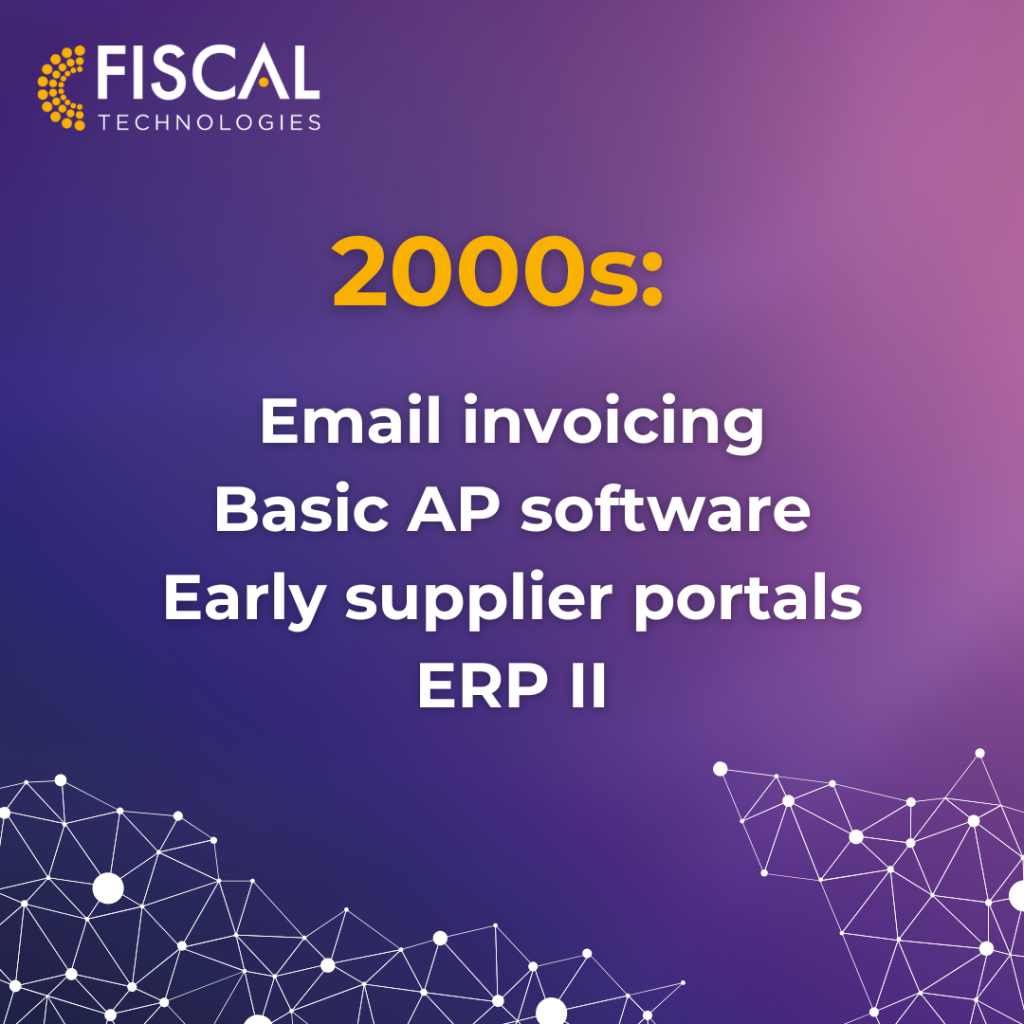
2000s:
- Email Invoicing: Begun in the 90s, the 2000s solidified the transition from paper to email for sending and receiving invoices. Removing the need for sending invoices in the post, this improved speed and reduced costs dramatically, allowing accounts payable to also improve days to pay.
- Basic AP Software: Early Accounts Payable software solutions were introduced, which automates invoice processing and approval workflows.
- Early Supplier portals: The first supplier portals sprang up in the late 1990s and focused primarily on procurement and getting deals for buyers. (https://www.supplychainbrain.com/articles/2847-if-supplier-portals-were-so-great-then-what-went-wrong)
- ERP II: Collaboration takes centre stage as the focus shifted from simple transaction processing to fully connected systems. Integrating CRM, Supply chain management, HR and the big one: e-commerce.
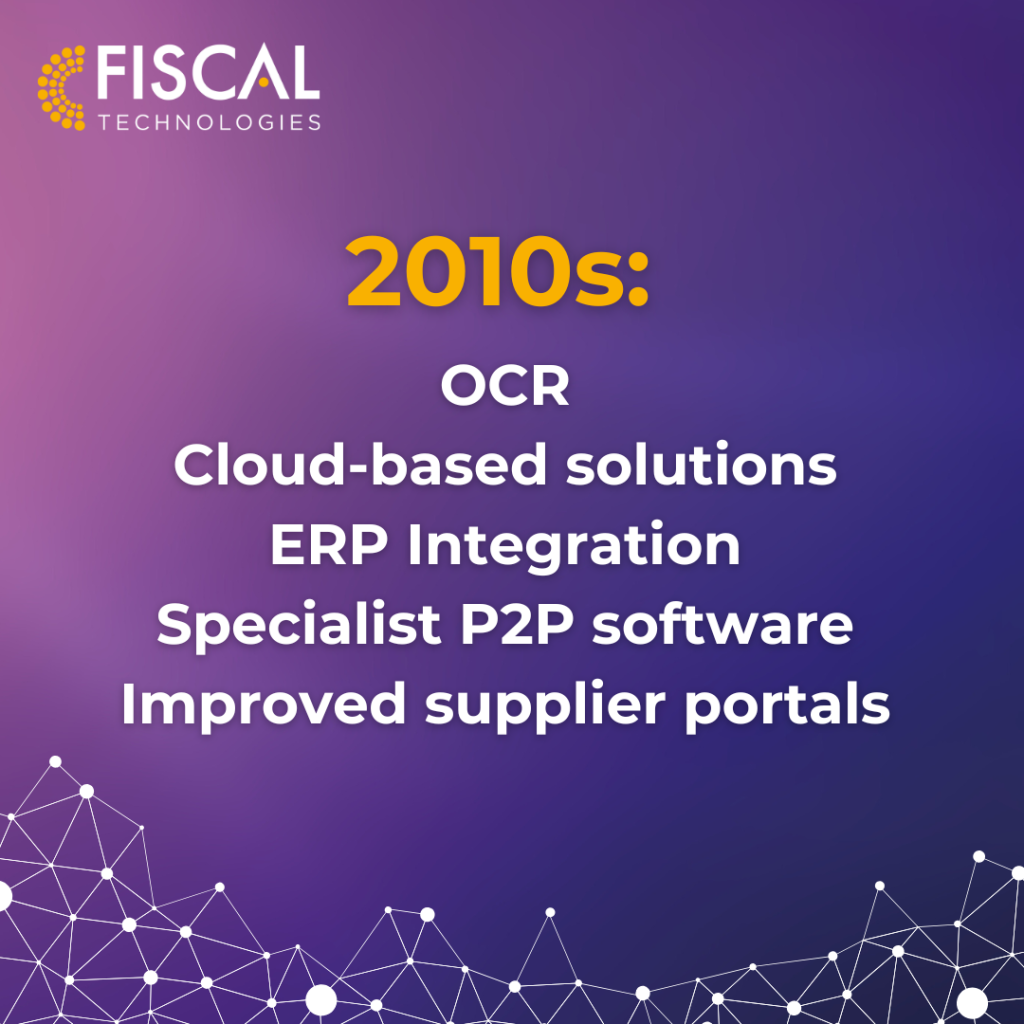
2010s:
- Optical Character Recognition (OCR): OCR technology begun to be used to digitise paper invoices and extract data automatically. This technology can also read PDF invoices, allowing the data to be digitally inputted into an ERP.
- Cloud-Based Solutions: More cloud providers and improved technology made software more accessible. Although the technology had been around for some time, it was only now that there was a shift to cloud-based AP and P2P platforms. Rather than being on-premise, cloud-based software meant finance teams could work from anywhere, enabling flexibility, cost savings, real-time access and collaboration.
- Integration with ERP Systems: There was enhanced integration between AP software and ERP systems for seamless data flow and improved accuracy.
- Specialist P2P software: Adoption of specialised software for real-time risk monitoring, compliance checks, and enhanced data security. An example of this is automated supplier statement reconciliation, which went from a manual process with highlighters and multiple sheets of paper to a streamlined process where AP simply needs to investigate discrepancies.
- Improved supplier portals: Portals became more focused on the individual companies, though industry portals still exist. They facilitate transactions between them and their suppliers, fostering collaboration. This centralised process allows better control and speed than emailing back and forth, downloading attachments and so on. Not to mention it’s scalable and allows for easier auditing and compliance. As this continues to grow, reliance on email invoicing may slow.
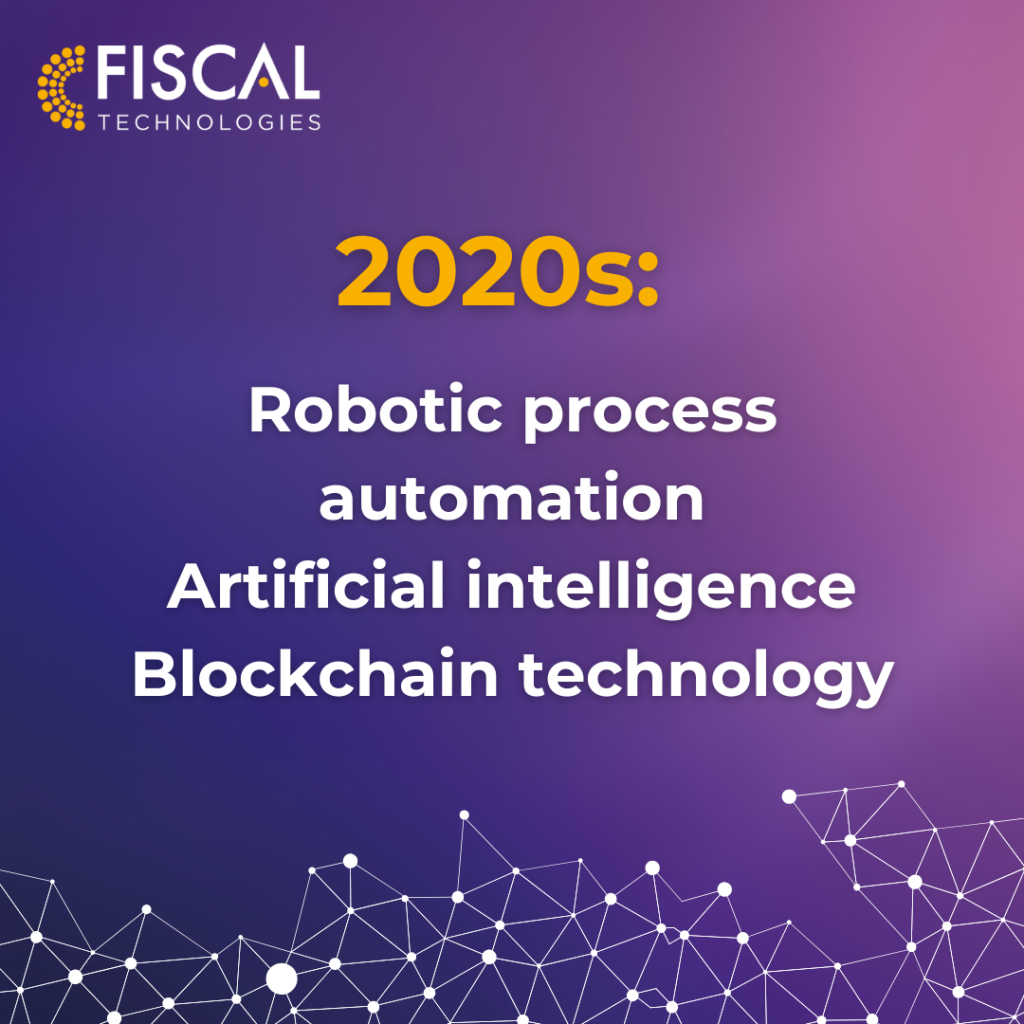
2020s:
- Robotic Process Automation (RPA): The 202s saw the increased automation of repetitive tasks such as data entry and invoice matching and even full processes, reducing manual effort and errors. Automation such as this has led to the notion of a touchless process from procurement to payment, which many teams aim for.
- Artificial Intelligence (AI): 2023 was the year of AI, and since then we have seen deployment of AI for predictive analytics, fraud detection, and intelligent invoice processing. This technology allows teams to further streamline their processes, saving time on complex data. Despite serious updates to improve the quality of AI outputs, it is still not entirely trustworthy and can easily misunderstand a request. The source of the data is also extremely important. If the source is incorrect then the AI will simply regurgitate misinformation.
- Blockchain Technology: Exploration and integration of blockchain for secure and transparent transaction recording and verification.
The future?
Expansion of artificial intelligence
With a huge boom in popularity in recent years, it’s clear that AI has some incredible uses to help finance teams in continuous optimisation of processes. We expect to see further integration of AI into ERPs and P2P software. In terms of risk management, machine learning enables recognition of patterns in supplier behaviours, and therefore identification of unusual behaviours that could signify a mistake or, more seriously, a fraud attempt. As the models for AI get more sophisticated, so will their outputs, making it more and more accurate.
Internet of Things (IoT)
Businesses will soon be leveraging networks of physical objects for real-time tracking and management. This could be a device in your warehouse that tracks inventory, alerting you when inventory is low, or even triggering an automated order for approval. The device could analyse this information over time to give you an estimate of when that item should next be ordered. This can save time, automate taking inventory and thereby improve productivity.
Hyper-automation
As of 2025, just 6.6% of AP processes are fully automated. With a further quarter around 75% of the way there, and 31.9% half-way (APA Accounts Payable Industry Benchmarking report 2024), we expect that number to rise rapidly in the near future.
Teams will expect to combine multiple advanced technologies to create fully automated, end-to-end AP and P2P processes. Beyond that, we could see everything from inventory, to procurement, to payables automated. But how far is too far? There is the question of what happens when there is an error somewhere in the system and it is not rectified. We firmly believe that despite automated processes, there will still be the need for checks and human intervention to correct error or discrepancies.
Digital transformation, then and now
Procure to Pay has certainly come a long way since the days of physical order forms and POs, posted invoices and manual cheque payments. Where suppliers used to wait months to be paid, now the standard tends to be set at 30 days or less. While the term ‘digital transformation’ only truly gained traction in the mid-2010s and hit a peak in recent years (google trends), we’ve been transforming ways of working for far longer. As our technology continues to improve, so will the way organisations and finance professionals use it. In sense, we’re always evolving and transforming. So, we advise you to go into the future with open, but shrewd, minds and be well-prepared before taking that plunge to full automation.
Want to be prepared for errors and discrepancies? We can help.
Our software is designed to automatically check for issues and errors in your data, ensuring that you and your team are notified if we find anything you might need to investigate.