 Transaction risk intelligence
 Automated supplier statement reconciliation
 Supplier risk intelligence
 Managed AP recovery audit
 Supplier file performance review
 Forensic risk analysis
 Consulting and bespoke reporting











How often do you hear your team fielding supplier calls about late payments while simultaneously trying to close the books?
The statistics say that spending too much time on supplier queries is a key issue for many AP teams, but at the same time, strong supplier relationships are good for business.
This blog talks about how to get that balance, and why AP automation is the key.
Why supplier relationship management matters more than ever
While Accounts Payable is largely associated with dealing with invoices and payments, there’s no denying that supplier management is linked. In fact, you could say that at the heart of AP is the supplier relationships. Without communication and a solid foundation, the team can be plagued by queries that can arrive via multiple avenues. This creates confusion and causes inaccuracies and delays.
In short, a good supplier relationship matters, on a process level to ensure payment accuracy and fewer disputes, and on a business level where suppliers are happy to keep trading.
But finance professionals are all too aware that good supplier relationship management isn’t a simple feat. There are many factors to be aware of, from contracts and payment terms to VAT verification, statement reconciliation and effective communication.
There’s more: Supplier files are getting more complex. More suppliers are being added, and sometimes those aren’t simple, needing purposeful duplication to differentiate between, for example, the source of the supply and the parent company. Alterations to bank details or other information need to take place. And with more changes comes higher margin for error.
According to a PPN survey, supplier checks don’t happen very often. In fact, 37% only happen at onboarding. 30% are ad hoc. Just 4% of AP teams check their suppliers every day. Even then, those controls don’t generally include sanctions checks, politically exposed person connections, or even connections between the supplier and their employees.
We can’t help but wonder if those numbers are affected because of how long it takes to check and update suppliers by hand.
AP automation is now essential to maintaining strong, reliable, risk-free supplier relationships. It can strengthen controls, increasing accuracy and efficiency in the process, from onboarding to statement reconciliation and beyond.
What Is AP automation?
Let’s be clear on what we’re talking about specifically, because AP automation gets used to describe everything from basic optical character recognition to full no-touch processes.
AP automation refers to technologies that streamline tasks across the accounts payable process including invoice capture, PO approval, and reporting.
It’s designed to remove the possibility of human-made, manual errors, and increase process speed for increased productivity.
Crucially for supplier management, automation standardises processes that would otherwise be inconsistent across teams or business units.
How AP automation is used to improve supplier relationships
Here’s what’s changed. Automation can now handle the relationship-damaging friction points that manual processes create: the delays, the data quality issues, the missed risk indicator. It leaves the strategic relationship management where it belongs: with you and your team.
Your payment timing becomes predictable and defensible
The problem isn’t that you’re deliberately paying late. It’s that invoices get stuck in approval queues, exceptions take days to research, and you can’t always tell suppliers exactly when they’ll be paid.
Automation creates predictability: Invoice intake, matching and approvals reduces bottlenecks. Emails don’t sit in an inbox for days, exceptions are found immediately, payment cycles are tracked easily – allowing you to communicate or make payments earlier, and building credibility as a result.
According to an Atradius study, 32% of suppliers would stop doing business with a customer following continued late payments. On-time payments build trust and strengthens commercial relationships, while prompt communication strengthens the relationship with their Receivables team.
Data quality issues get caught before they cause problems
For AP, accurate data is key. Having automated controls makes the process far simpler and faster.
- Continuous automated monitoring catches:
- Duplicate supplier records before you pay the same invoice twice
- Bank detail changes that need verification before you send payment
- Incomplete records before they cause processing delays
- Dormant suppliers mixed in with active ones, cluttering your master file
Consistent checks allow for real-time error alerts that reduce common causes of delays and disputes, thereby decreasing processing times and the possibility of fraud.
You can manage supplier risk proactively
Here’s the uncomfortable truth: you’re probably not checking supplier credit scores regularly, monitoring sanctions lists, or screening for ESG risks unless an issue surfaces. Not because you don’t think it matters, but because manually checking hundreds or thousands of suppliers simply isn’t feasible.
Automated monitoring can run checks on the master supplier file, flagging any issues early for further investigation or amends before payment.
Rather than just compliance, AP automation allows for wider visibility and timeliness, allowing your team to act strategically at an earlier stage. Here are a few examples of where automation provides this function:
Indicators of fraud such as a recent change to the supplier file, or mismatched bank details.
Compliance issues such as appearance on sanctions lists. Avoid those potential fines and gain peace of mind that working capital is protected, and you reputation stays intact.
Reputational issues like adverse media and ESG red flags.
Low credit scores. Discover early indicators for supply chain issues and prepare for that eventuality before it becomes a problem.
Reduced risk of supplier-related fraud
You’re aware of the common invoice fraud schemes: fake invoices from legitimate-looking suppliers, payment redirection via bank detail changes, duplicate invoices, and invoices for services never rendered.
Manual processes rely on individual vigilance across your transactions. But people don’t have the time to complete this, and it’s all too easy for a busy AP clerk to not notice a rogue number.
Automation identifies suspicious patterns and inconsistent data in real time. This includes changes to supplier information and invoice exceptions like unusual amounts or duplicates.
Not only do automated controls find these issues, but a platform like a supplier portal will also help keep the organisation protected from vulnerabilities which lead to impersonation and misdirected payments.
Your team can then investigate those flagged items, so instead of hoping nothing slips past them, you’re safe in the knowledge that you’ll be alerted whenever something is out of place.
The benefit for the supplier? Fewer duplicate invoices or fake invoices in their name means less pause in the process, helping to pay them quickly.
The benefits of supplier relationship management for AP and finance
We’ve talked about the immediate benefits and the minute reasons why AP automation can help. Now let’s talk about why this is essential for the finance function and the organisation.
Workflow efficiency across P2P
A good supplier relationship doesn’t just affect AP. More accurate data makes things easier for procurement and the rest of the finance team too. Faster approvals and cleaner data reduce friction at every stage. Reduced manual workload also allows more time for essential, valuable tasks, speeding up processes overall.
Consistent supplier experience
Automated solutions enable AP teams to give suppliers regular, clear communication, to resolve disputes fast and optimise processes. As a result, your team benefit from reduced supplier queries, fewer escalations and smoother month-end activity.
Your AP team gain have better visibility of the issue and any potential history. This in turn improves the speed and confidence in which your team can communicate with suppliers.
Fewer disputes and faster resolutions
Common queries or calls fielded tend to ask for updates on payment, signalling impatience from the supplier. However, if the process can be faster due to more accurate data, and payment can take place within terms, the likelihood of this type of query lessens.
Automated systems give AP team more visibility – they’re able to investigate issues more quickly if a dispute occurs. This also has the bonus of improving their confidence during communication with suppliers.
Audit readiness and compliance
Automation ensures all actions are logged, timestamped and traceable. It’s therefore extremely easy to retrieve and study data sets, simplifying audit cycles and reduces stress at month or year-end.
If the automation platform features a risk analysis module which identified potential data inaccuracies, this can also increase audit readiness, identifying potential fraud instances and errors for investigation long before the audit. This supports regulatory standards for fraud prevention and financial governance.
Improved supplier relationships and business continuity
By improving payment accuracy and reliability, trust within the supplier relationship increases. This can lead to better supplier performance, and a more stable supply chain.
What comprehensive risk intelligence adds
Where standard AP automation tools and ERPs focus on delivering a breadth of functionality, specialised risk intelligence software delivers specialised depth of insight – detecting hidden patterns, and subtle fraud signatures.
Continuous advanced monitoring analyses every invoice and supplier interaction daily, strengthening visibility and controls at scale.
It identifies:
- Dormant or duplicated suppliers
- High-risk suppliers
- Unusual activity within supplier groups
- Hidden anomalies in spend patterns
- Early warning signals for fraud or error
This gives the AP teams the visibility they need to manage supplier relationships proactively.
How Finance and AP teams can strengthen their fraud prevention strategy today
Fraud risk is growing faster than manual processes can handle, so AP automation is fundamental. The strongest fraud defences combine specialist tools with human oversight.
Here ‘s how you go that one step further with your AP fraud controls:
- Standardise and automate core invoice workflows and approvals.
- Establish clear escalation processes for exceptions.
- Put further controls in place for fraud indicators, with AI-driven risk analysis.
- Strengthen supplier master file verification.
AI, with human oversight: A winning combination
The extra icing on the cake is a combination of both automation and AI, and a level of oversight where humans can still take control of the narrative.
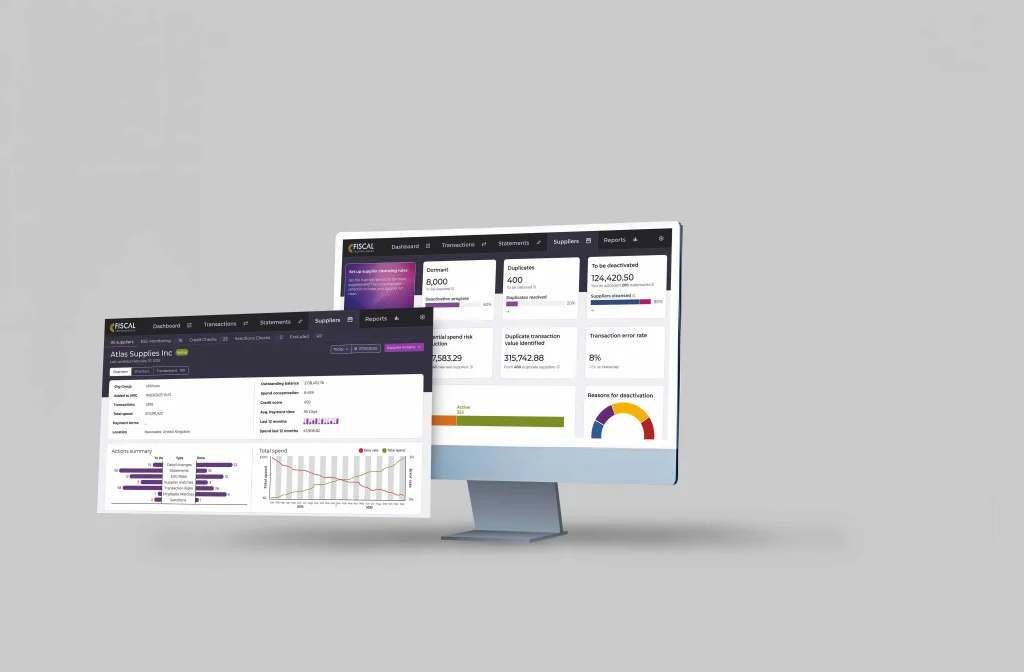
While automation provides speed and AI provides depth and insight, FISCAL’s solution allows for human judgement. For supplier relationships in particular, nuance is vital, and the human brain can think through every eventuality to make the call that best suits the organisation.
This enables teams to go beyond operational efficiency and truly optimise supplier management.
Moving towards high-performance supplier management
Supplier management is too complex to be simply about paying invoices and updating a few details. It’s now about managing risk, maintaining strong relationships, and ensuring operational stability.
AP automation gives teams the foundation they need with reliable processes, clean data, and consistent workflows. AI takes it further, providing stronger core controls. And human oversight and input is the final layer of protection.
Best-in-class finance teams are already moving towards this model — ultimately building a highly efficient process which safeguard their organisation’s financial health and supplier relationships.
We’d be happy to help you evaluate whether FISCAL’s approach fits your situation
Speak with someone who understands your operation
Get your questions answered about implementation, integration, and whether this makes sense for your specific context.