 Transaction risk intelligence
 Automated supplier statement reconciliation
 Supplier risk intelligence
 Managed AP recovery audit
 Supplier file performance review
 Forensic risk analysis
 Consulting and bespoke reporting











Under the Procurement Act 2023, contracting authorities are now required to publish a payments compliance notice every six months. For finance teams in local government and other public bodies, this means your payment performance and compliance will become a matter of public record this year. But the question we’d like to ask is a simple one: Is your data ready for that?
What is a Payments Compliance Notice?
A payments compliance notice (PCN) is a formal report that sets out how well your organisation has paid its suppliers over a six-month reporting period, specifically, whether payments were made in line with section 68(2) of the Procurement Act 2023.
Contracting authorities must publish the notice on the central digital platform within 30 days of the end of each reporting period.
The purpose is transparency. By making payment practices publicly visible, the legislation aims to drive faster supplier payment and allow public sector organisations to be benchmarked directly against their private sector counterparts.
While there are no direct penalties for not publishing Payments Compliance Notices under the law, the Procurement Review Unit (PRU) has powers to investigate compliance, require progress reports, publish reports highlighting non-compliance and provide guidance on lessons learned. This means that public sector authorities will be scrutinised closely, and will effectively be ‘named and shamed’ for non-compliance, which could result in reputational damage.
For guidance on these notices, please visit the UK Government website.
What does a payments compliance notice need to include?
Each notice must cover:
- Payments measured from the day an invoice is received.
- The average number of days to pay, broken down into timescale bands: 1–30 days, 31–60 days, and 61+ days.
- Any late payment liability interest accrued.
- A statement from a director or equivalent officer responsible for the organisation’s finances confirming they approve the notice.
That final point matters: A senior finance leader is putting their name to the figures. Inaccuracy simply isn’t an option.
Why this is important for finance leaders now
Payments Compliance Notices are in effect now (as of 1 October 2025) – and they must be completed within 30 days of the last day of a reporting period. For example, if your reporting period ends on the 31st March, you’ll have until the 29th April to complete the payments compliance notice.
The operational challenge is real. Pulling together six months of payment data, categorising it correctly, calculating late payment interest, and getting director sign-off is a significant undertaking that costs resource.
Data and reporting is where effort is required overall. If your data is clean, and you already have a real-time report prepared, gaining the required data becomes easier and faster, and your confidence in that data improves.
The reputational dimension here is equally important. Your payment practices will be publicly comparable with other authorities and with private sector businesses. Poor performance won’t go unnoticed, by suppliers, auditors, and compliance officers alike.
The good news? With the right tools in place, compliance doesn’t have to be a scramble.
How FISCAL can help you with Payments Compliance Notices
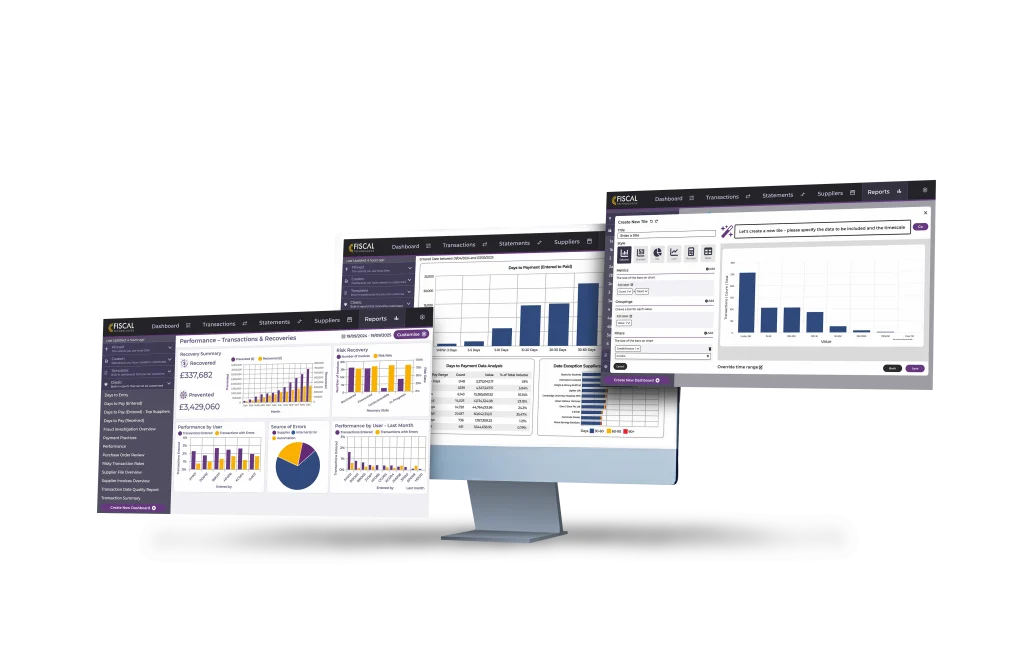
FISCAL’s P2P risk management software allows you to control payment risks including duplicate payments, fraudulent payments, and overpayments. It includes flexible reporting tools to track the metrics you want, in the way you like to work. You can even configure your own with our AI report generator.
Specifically, we feature pre-built reports including a Payments Compliance Notices report, which calculates your metrics automatically, so you’re not piecing together data at the last minute. It also allows you to drill down into the underlying data to optimise your payment processes.
With dashboards and filters built in, FISCAL gives you full visibility of your payment performance throughout the year. Your team stays in control, and your director can sign off with confidence.
Using FISCAL’s custom reporting tools, you can:
- Spot trends early. If late payments are increasing, you’ll know well before the reporting deadline.
- Investigate root causes. Which suppliers are being paid late? Which teams are responsible? Is it a process issue, a dispute, or a data problem?
- Take corrective action. With enough lead time, you can course correct before any issues affect your published figures.
- Report with confidence. Reviewing your data through the year means your final notice is accurate — and reflects well on your finance team.
Compliance doesn’t need to be stressful. With FISCAL, it’s another process you’ve already got covered.