 Transaction risk intelligence
 Automated supplier statement reconciliation
 Supplier risk intelligence
 Managed AP recovery audit
 Supplier file performance review
 Forensic risk analysis
 Consulting and bespoke reporting











Modern P2P teams have a choice when it comes to how they reconcile their supplier statements. Three choices, actually. They can choose to reconcile statements by hand with a trusty highlighter, or assisted by Excel. They can outsource the task. Or they can use an automated solution in house. But which is the best option for you? We’ll talk about the finer details soon, but first, let’s talk about the problem itself.
The goal of supplier statement reconciliation
Supplier statement reconciliation is the process of checking statements against financial documents to ensure your ledger is accurate. This uncovers issues including missing or unpaid invoices, errors, duplicate payments and untaken credits.
The goal is to recover overpayments, apply credits, correct errors and ensure accuracy. With that comes the benefit of happier suppliers too.
But method matters when getting the best results from the process.
The problem with manual supplier statement reconciliation
Manually reconciling statements is a long-winded, labour-intensive task. There are risks involved too: Missing a line, overlooking an error, not noticing untaken credits. It’s difficult enough for teams to find the needle in the haystack. Rushing the process or disengaging for a second could negate it if they miss something important.
While using Excel to do this can negate some of the risk, it’s not perfect, and it’s still very time-consuming.
The core issue is modern finance teams don’t have the time to waste. And spending so much time on this task doesn’t earn enough reward. Teams are lean, systems are complex, and supplier files are burgeoning. The workload is higher. As a result, teams end up doing the minol. They often only complete the top 10 or 20 suppliers where they spend the most, leaving the tail of their supplier file unreconciled.
These organisations know, and intend, to do more but struggle to find the resource or capacity. So what can be done in this scenario?
Outsourcing supplier statement reconciliation
Specialised recovery audit and statement reconciliation providers manage high-volume, complex reconciliations for you. This negates the time issue, freeing teams from manual work to focus on strategic tasks.
Outsourcing supplier statement reconciliation improves accuracy too. Specialists have access to sophisticated systems and tools to help them.
However, it costs money to do outsource, and the more reconciliations, the more costly it is. So, consider whether it will be cost-effective to reconcile all our your supplier statements via outsourcing, or not.
If not, this leaves the issue of either not having complete accuracy, having your team pick up that slack, or leaving them unreconciled.
Find out about managed statement reconciliation and recovery audit services.
Supplier statement reconciliation automation
Our recommendation is to automate supplier statement reconciliation.
It saves your team a huge chunk of time when matching between the ledger and supplier statements. Specialist software uses purpose-built AI algorithms to retrieve and verify financial documents and transaction data, and compare data sets. It identifies only discrepancies and areas for action. Your team investigates only what matters. With integrated suppliers communications and automated responses, you can achieve a hands-off approach. So, your team find the needles in the haystack, and make it far easier resolve issues and recover overpayments.
However, any software costs money. It also requires implementation and training. In terms of the process, some input is still necessary, though we are talking minutes, not days of work.
Bear in mind the costs and inefficiencies of doing this without automation. Weigh against software costs, expected implementation and training, and the recovery potential to decide if this option will work for you.
Cost versus reward in statement reconciliation
The option you choose comes down to four trade-offs.
Manual processing keeps costs low upfront but demands significant team time. Your finance staff handles everything in-house, resulting in high labour and slower completion. Excel-based systems cut some labour burden through automation of basic tasks. But spreadsheets require ongoing maintenance, formula management, and manual intervention. That time adds up.
Outsourcing removes the day-to-day work from your team, freeing internal resources. The downside is cost. Fees can be large, and you lose direct control over the process.
Automation shifts the economics. Upfront costs are moderate – It’s typically £5,000–£18,000 for larger organisations. However ongoing labour drops significantly. Matching time per statement compresses from 30 minutes to seconds. Your team moves from execution to exception-handling, adding value.
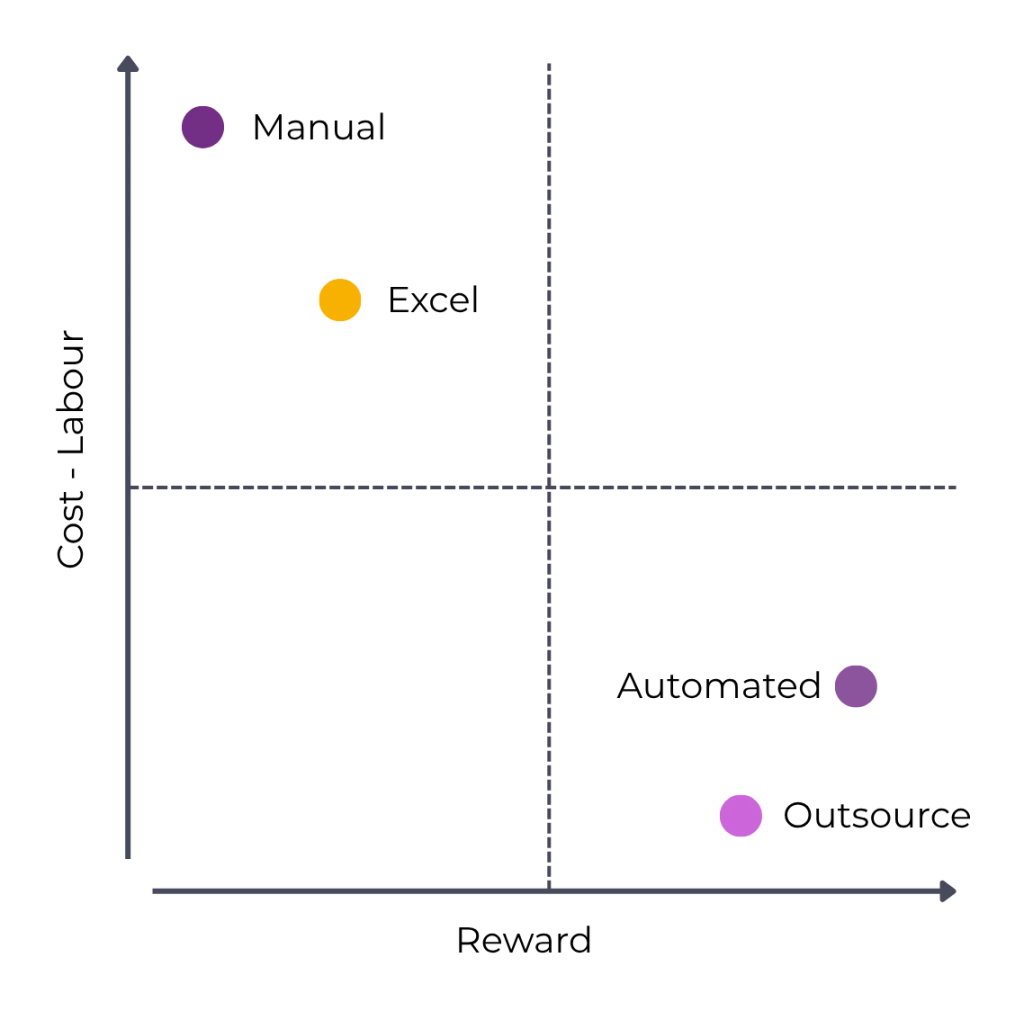
The choice depends on your priorities. If cash flow is tight and your reconciliation volume is low, manual or outsourced approaches may make sense. If your team is stretched thin or reconciliation errors are costly, automation looks like a better option.
There’s one concrete figure worth considering. Automated systems typically identify 0.5–2% of annual spend in overpayments, duplicate invoices, and missed credits. Our data shows the average value recovered sits at £13,000. Whether that justifies the investment depends on your current situation and what that time is worth to your team.
Automated Supplier Statement Reconciliation
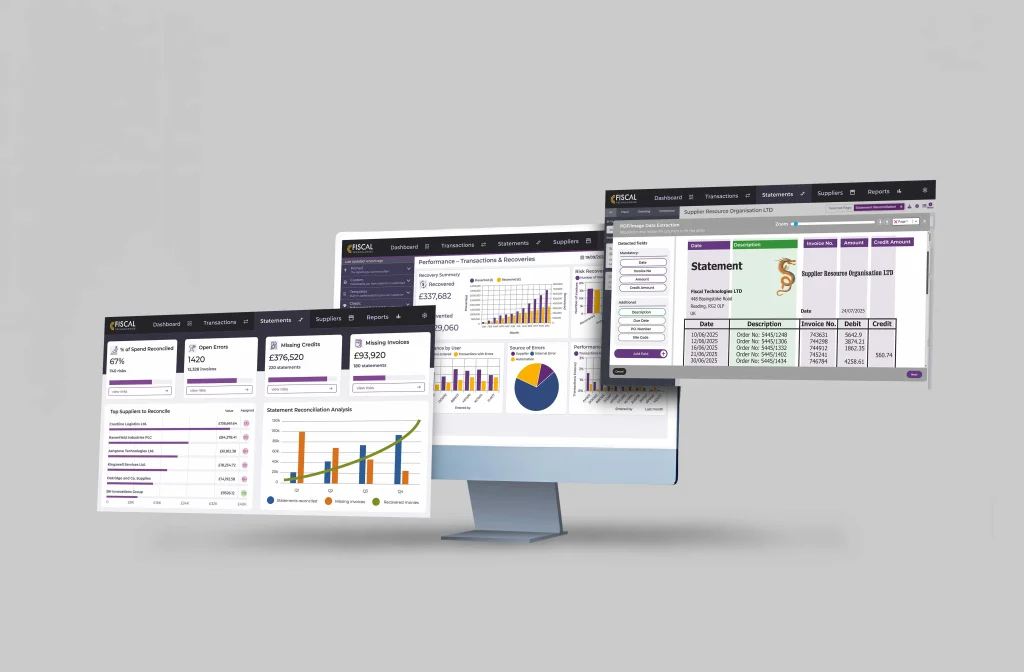
Automate supplier statement reconciliation and match more statements, more often. Our software uses AI to automatically read supplier statements and compare ERP data to find exceptions, saving time and increasing productivity. With the AP communications hub, you can also communicate with your suppliers in the software, keeping all your reconciliation efforts in one place so it’s easy to track. You can shift team focus to strategy, accuracy, and overpayment recovery.
A unique approach is FISCAL’s commitment to oversight – your software gives you the option to oversee the whole statement reconciliation process. Which suppliers are linked to which statements, where Users can choose to use templated versions of supplier comminucations, or can edit those emails. They can also approve the emails before sending.
Further, we provide analytics to review statement reconciliation performance in detail.
Managed Supplier Statement Reconciliation
For accounts payable teams with less time, we offer targeted statement matching to identify discrepancies between your accounts and supplier statements. Improve your ledger accuracy, gain more control over transactions, and recover overpayments, missed credit notes and rebates.