 Transaction risk intelligence
 Automated supplier statement reconciliation
 Supplier risk intelligence
 Managed AP recovery audit
 Supplier file performance review
 Forensic risk analysis
 Consulting and bespoke reporting











For large UK businesses, Payment Practice Reporting is a tick in the box twice a year. But in 2026, with a third annual submission now required for the directors’ report, the stakes have risen. The question is, do you know what your figures look like before you publish them?
The visibility gap in Accounts Payable
Most finance teams treat Payment Practice Reporting as a periodic compliance task. Twice a year (now three times), someone pulls together the statistics, the report gets submitted, and everyone moves on.
The problem? By the time you’re compiling that report, the numbers are already locked in. If your late payment rate has crept up or your average days to pay has drifted beyond what you’d want suppliers or peers to see, there’s nothing to be done about it.
This is the visibility gap, and it’s more common than you might think.
What gets measured gets managed
Payment Practice Reporting requires large companies to publish several metrics, including:
- Average days to pay invoices
- The percentage of invoices paid within 30, 60 and 60+ days
- The proportion of payments made outside agreed terms
- The value of late payments
- Late payments resulting from disputes
These figures are publicly available. Suppliers check them. Prospective partners review them. And since 2025, the metrics have expanded to include additional detail on late payment values and dispute-related delays.
For businesses signed up to the Prompt Payment Code, average days to pay and late payment rates carry particular weight. Poor figures can trigger removal from the Code. It’s a reputational issue that’s difficult to recover from.
How do your PPR figures compare?
Based on published Payment Practice Reporting data, the UK average for large companies sits at around 34 days to pay, with 23% of invoices paid outside agreed terms. Only 59% of invoices are paid within 30 days, while 12% take longer than 60 days.
If your figures are worse than these averages, suppliers will notice. If they’re better, that’s a competitive advantage worth protecting.
Three reporting cycles, one continuous challenge
From 2026, Payment Practice data must also be included in the directors’ report. That means three separate calculations across the year: Two half-yearly submissions plus the annual report.
For finance teams already stretched, this creates a recurring burden with hard deadlines. But it also creates three opportunities for your payment performance to be scrutinised.
If you’re only looking at these figures when it’s time to report, you’re operating blind for most of the year. It’s only possible to manage this if you’re tracking those figures throughout the year.
The cost of poor visibility in payment practices
Without ongoing insight into your payment performance, several risks emerge:
Compliance risk
Late submission of PPR data can result in fines. Inaccurate reporting, even unintentional, can lead to penalties for lack of due diligence.
Reputational risk
Your PPR figures are public. Suppliers can see exactly how you treat your supply chain. Poor figures may affect your ability to negotiate favourable terms or attract quality suppliers.
Missed improvement opportunities
Payment data tells a story. It highlights which suppliers are consistently paid late, which business units are struggling with invoice processing, and where disputes are causing delays. Without visibility, these patterns remain hidden — and the underlying process issues go unaddressed.
From compliance to continuous improvement
The most effective approach to getting better payment practice statistics is to look at the bigger picture. Don’t treat it as a reporting exercise that only happens a couple of times per year. Instead, build visibility into your everyday operations with real-time reporting and monitoring.
When you can see your payment metrics in real time, you can:
- Spot trends early. If late payments are increasing, you’ll know before the reporting deadline.
- Investigate root causes. Which suppliers are being paid late? Which teams are responsible? Is it a process issue, a dispute, or something else?
- Take corrective action. With enough lead time, you can course correct long before any problems affect your published figures.
- Report with confidence. Reviewing your data through the year, and acting on it early means you have peace of mind that your report is accurate and reflects well on your finance team.
Building a foundation for better Payment practice reporting
Effective Payment Practice Reporting starts with clean, easily accessible data. Often, there’s pain in calculating the figures anew each time the reporting window arrives. So, knowing which invoices have been paid, when they were received, when payment was due, and when the supplier received the funds is paramount.
For many organisations, this data exists across multiple systems including ERP platforms, AP automation tools, Invoice management systems, and consolidating that data is often a difficult process. For many this ends up in the form of a highly manual excel spreadsheet that needs to be updated each cycle.
The solution lies in bringing this data together in a way that allows for ongoing monitoring – having one source of truth with effective reporting tools. This could be via a piece of software, automation tool
When your payment data is visible throughout the year, PPR becomes a byproduct of good practice rather than a standalone compliance burden.
The PPR bottom line
With three reports now required each year, the administrative burden for Payment Practice Reporting is increasing. While spending time calculating payment is bothersome, the true risk lies in publishing figures you haven’t had time to understand or improve.
Year-round visibility transforms PPR from a compliance headache into an opportunity. It gives you control over your data, insight into your processes, and time to make meaningful improvements before your figures become public.
The question for finance leaders is straightforward: would you rather discover a problem when you’re submitting your report, or months earlier when you can still do something about it?
How FISCAL can help
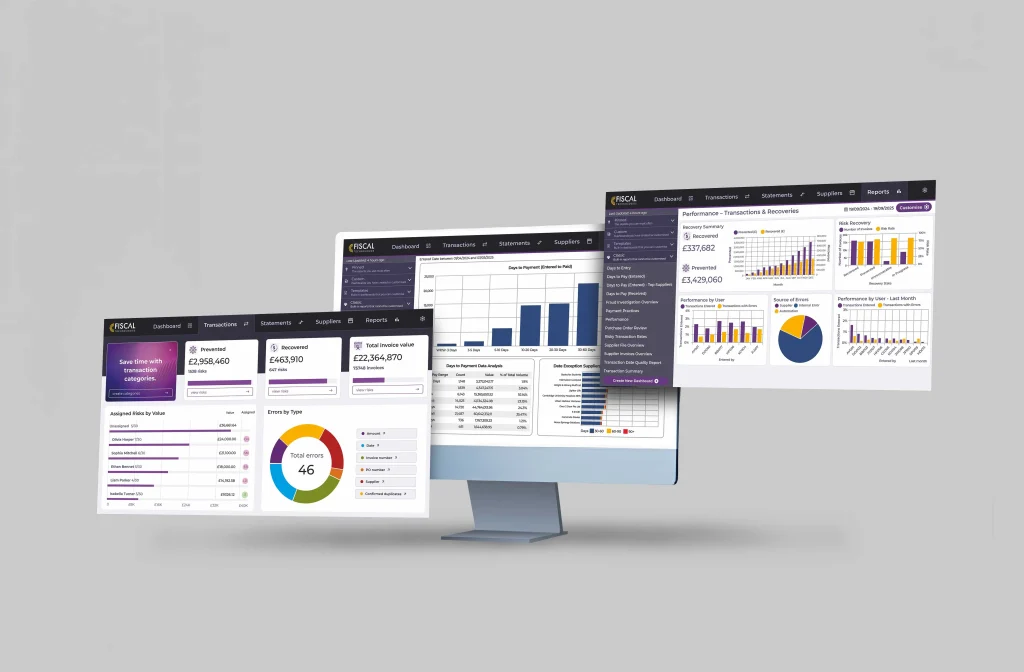
FISCAL’s P2P risk management software allows you to control payment risks including duplicate payments, fraudulent payments, and overpayments. The software includes reporting functionality which, contains Payment Practice Reporting tools to calculate your metrics automatically and allow you to drill down into the underlying data. With dashboards and filters, you can monitor your payment performance throughout the year.